Embedding a Design System Into Everyday Product Delivery
Profession.hu · Digital Product Development · May 2026 — Ongoing
The challenge
The organisation had an established design system, but its use depended heavily on the capacity of one UI/UX specialist. Across more than 20 parallel projects, five delivery teams, and at least 50 affected participants, that model could not scale. When specialist support was unavailable, design and development decisions were made locally and often remained undocumented, allowing missing components, inconsistent implementation, and design-system, UX, and technical debt to accumulate silently.
My role
I owned the complete intervention: designing the operating workflow, facilitating cross-functional agreement, documenting and formalising the process, and coordinating its implementation and continued refinement.
Delivery approach
- 1Spent four weeks preparing the workshop, mapping the operating problem, and bringing together Product Managers, delivery teams, UI/UX, development, QA, and business stakeholders.
- 2Piloted the workflow while introducing a new product that would otherwise have risked falling between local delivery and central design-system governance.
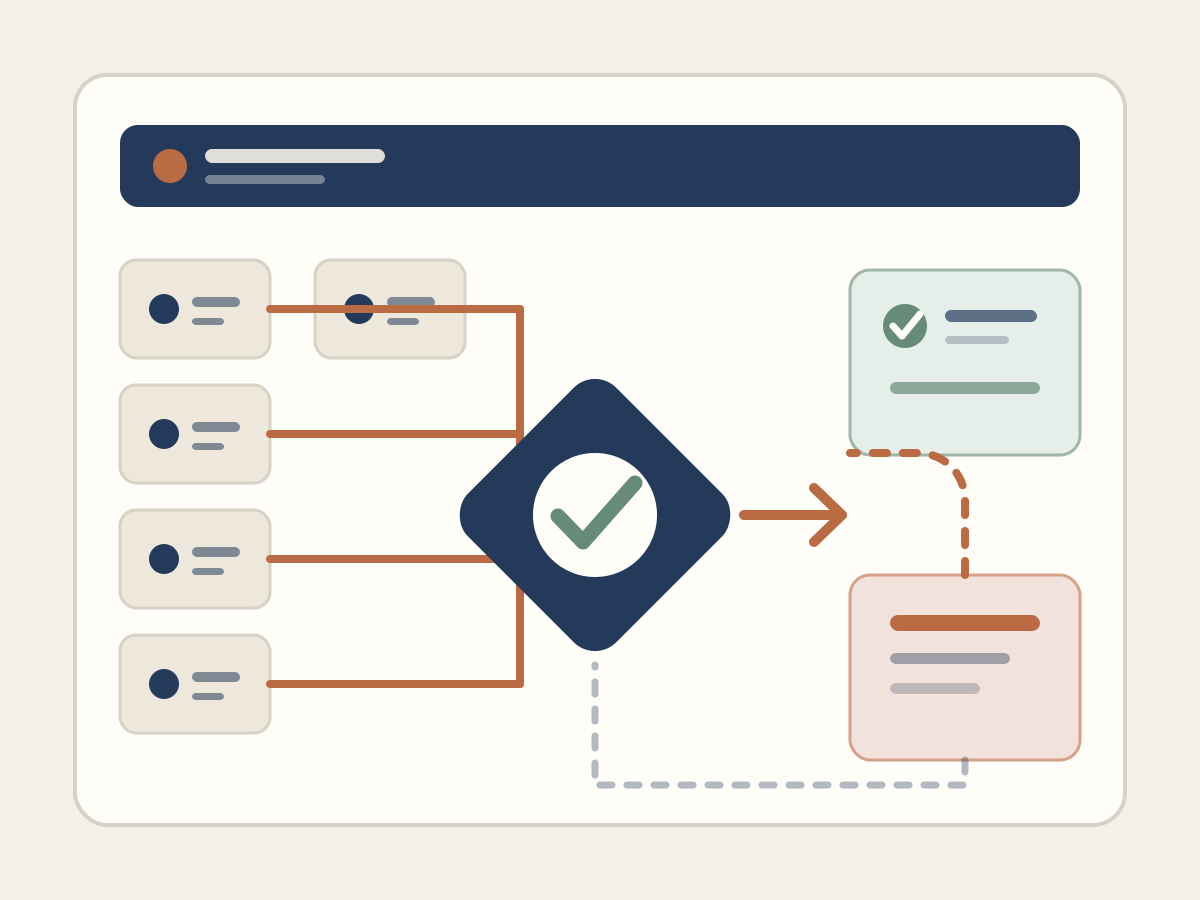
- 3Introduced a review sequence covering Product Owner approval, PDS review, identification of missing or non-compliant components, and a decision between immediate implementation and controlled deferral.
- 4Made deferred work visible through Jira records, documented exceptions, assigned owners, and planned follow-up instead of allowing local decisions to disappear.
- 5Used the pilot to build cross-functional agreement, secured unanimous approval over four weeks, and formalised Phase 1 during the following four weeks.
- 6Started a further twelve-week refinement period covering component versioning, deprecation, lifecycle management, knowledge sharing, and change communication.
Business value
- Introduced a mandatory Phase 1 workflow across all five delivery teams
- Replaced reliance on one specialist's availability with a scalable shared review process
- Exposed missing components, non-compliant designs, unrecorded debt, and unclear ownership
- Produced new or updated components, Jira records, an implementation plan, documented exceptions, assigned owners, and versioning decisions
- Secured unanimous cross-functional approval through a real new-product pilot
- Created a governance foundation suitable for more than 20 parallel projects and at least 50 affected participants