
A Ticket Is Not Ready Just Because It Has a Title.
A practical readiness test for turning vague backlog items into clear, bounded, testable deliverables.
A ticket with a title is not a requirement. It is a label. Sometimes it is useful. Sometimes it hides that the real decision has not been made yet.
This is one of the quiet reasons delivery slows down. The backlog looks active, sprint planning looks productive, and then development starts with a basic question: what exactly are we building?
A ticket is not ready when everyone recognises the topic. It is ready when no one has to invent the missing decision.
What a deliverable actually is
A task is something someone does. A deliverable is something the business receives.
A task says: create the form. A deliverable says: editors can create a product record with the required data, validation, and status needed for the publishing workflow.
If you cannot describe what will exist at the end, you are not managing a deliverable. You are managing effort.
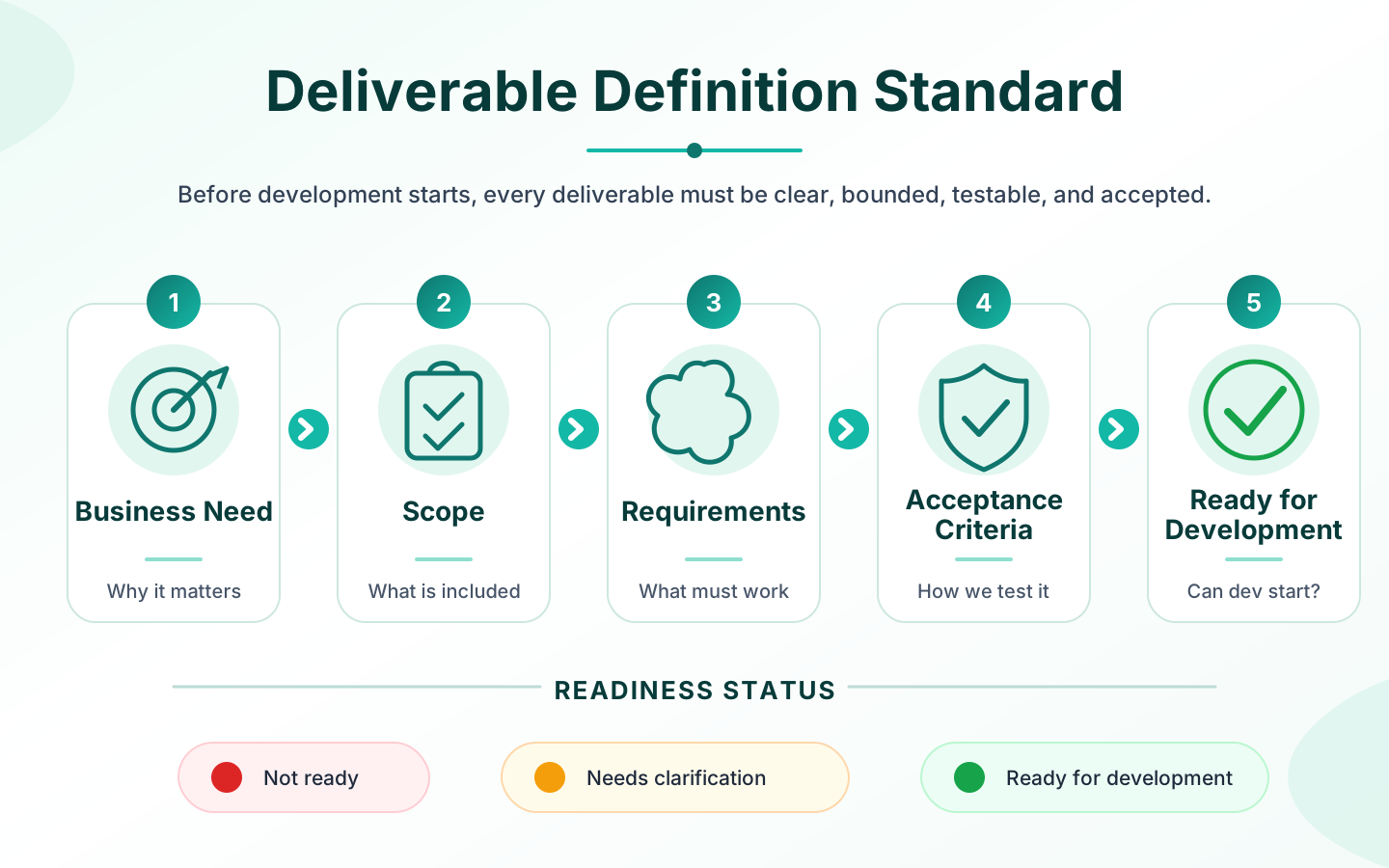
The five-part readiness test
1. Business Need
Why should this deliverable exist? What problem does it solve, who experiences it, and what business result does it support?
2. Scope
What will be delivered now, what is explicitly out of scope, and which decisions are deliberately deferred?
3. Requirements
What data, rules, workflow, permissions, dependencies, or system behaviour must be true for this to work?
4. Acceptance Criteria
How will the team prove that the deliverable works? Acceptance criteria are where the business promise becomes testable.
5. Ready for Development
Ready does not mean perfect. It means clear enough to start without gambling. Unknowns can remain, but they must be named and owned.
The three readiness states
- Not ready: the business need, scope, rules, or acceptance criteria are missing.
- Needs clarification: the intent is clear, but one or more decisions still need to land.
- Ready for development: the team can build, test, and demonstrate the deliverable without guessing.
How to use this in sprint planning
- Can we state the business need in one sentence?
- Can we say what is in scope and out of scope?
- Do we know the required data, rules, workflow, or system behaviour?
- Can we write acceptance criteria that are testable?
- Can the developer start without making hidden business decisions?
If an item fails the test, it does not automatically leave the backlog. It leaves the sprint candidate list. The work may be valuable, but it is not yet safe to commit.
The practical conclusion
A Deliverable Definition Standard is not paperwork. It is a small operating discipline that protects the sprint from fake readiness.
Anything less is not ready. It is just next in line.
Useful notes, without the feed.
Get new field notes on delivery, business analysis, Product Ownership, automation, and practical digital operations.
Written by Kristóf Frey
Kristóf Frey writes about delivery, Product Ownership, business analysis, and practical digital operations.